
QII Correction Notices - Examples & Best Practices
Common correction examples, how to resolve them, and best practices to pass your QII inspection on the first try.
QII Correction Notices
At Poppy Energy, our CalCERTS-certified HERS Raters perform hundreds of Quality Insulation Inspections each year across the Sacramento Valley — from Citrus Heights and Roseville to Elk Grove, Folsom, and the greater Sacramento metro area. Through years of experience working with builders, general contractors, and insulation crews on new construction, ADUs, and additions, we've documented the most common QII correction issues and how to resolve them efficiently. This guide shares that knowledge so your project can stay on schedule and pass inspection.
If insulation installation has not met the standards of the California Energy Commission, a correction notice may be served during your Quality Insulation Inspection. Correction notices are a normal part of the QII process — they identify specific areas where insulation needs to be adjusted, added, or reinstalled to meet code requirements.
Many issues can be corrected while the HERS Rater is still on site, while others may require an additional visit with photos for proof of correction.
If there are any questions or you need additional information or explanations on how to correct the issue, we are available to assist while the HERS Rater is still on site, or by calling our office.
We are here for you to succeed in your construction project.
Why Correction Notices Happen
Correction notices are issued when any part of the insulation installation does not conform to the specifications in the Title 24 energy report or the California Energy Commission's standards. Common reasons include:
- Installer oversight — Sections of wall, ceiling, or floor missed during installation
- Improper fitting — Insulation compressed, bunched, or not cut to fit around obstructions
- Missing air sealing — Foam strips, caulking, or other air barrier components not installed
- Wrong material or R-value — Insulation that doesn't match what the Title 24 report specifies
- Moisture issues — Insulation that has absorbed moisture beyond acceptable levels
Understanding these common causes can help insulation contractors and builders prepare for a successful QII inspection.
Common QII Correction Examples
Below are examples of corrections commonly needed during QII inspections. Each photo documents a real-world issue found during an inspection.
1. Missing Insulation on Exterior Wall
Missing insulation on an exterior wall is one of the most common issues found during QII inspections. All exterior walls must be fully insulated with no gaps or voids to meet Energy Commission standards. Even small uncovered areas can significantly reduce the wall's thermal performance.
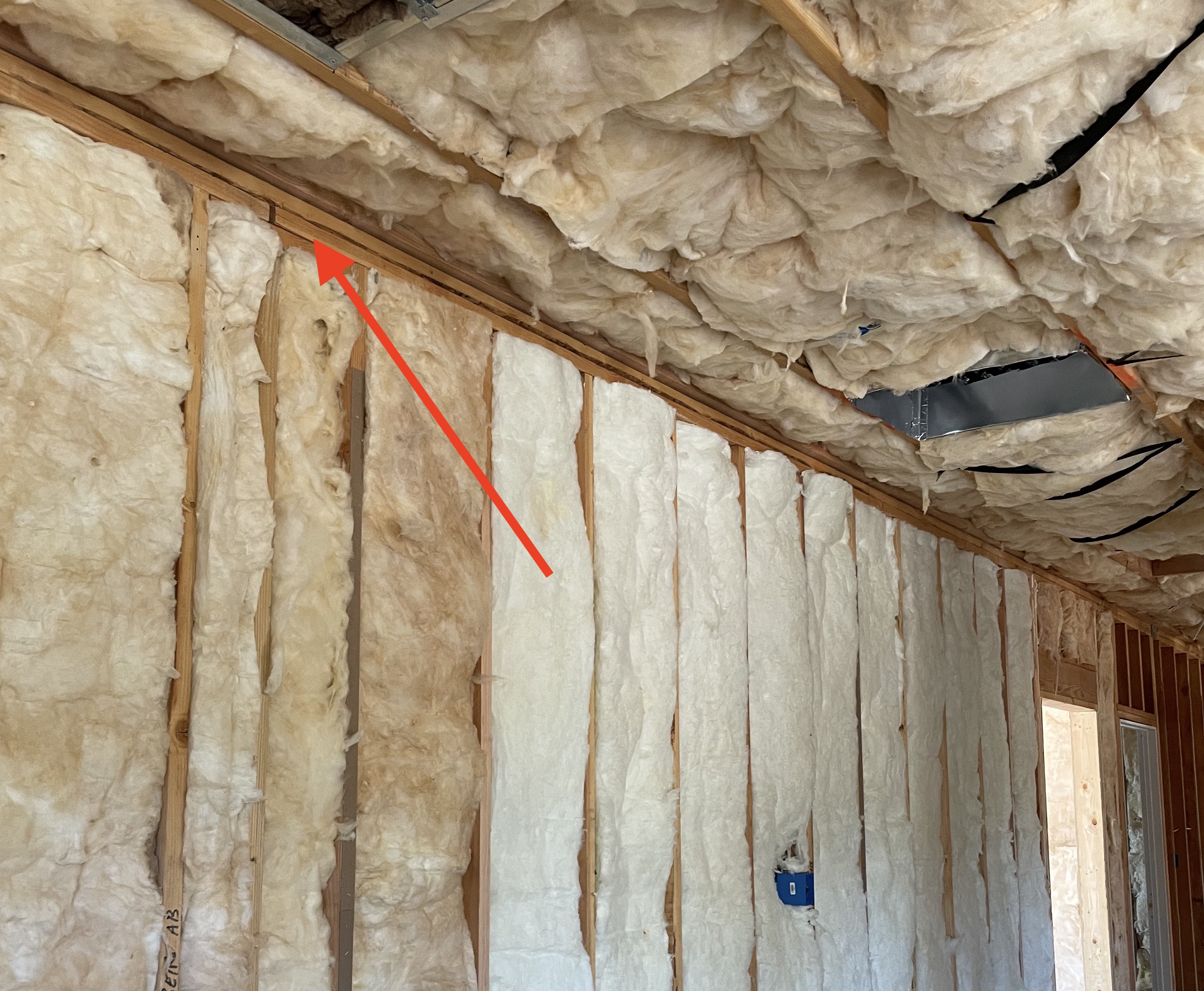
How to fix: Install the correct insulation material to fully cover the exposed area, ensuring the R-value matches the Title 24 report specifications.
2. Compressed Insulation by Electrical Wire
Insulation that is compressed by electrical wires or other obstructions does not perform at its rated R-value. When insulation is squeezed behind wiring, it loses thickness and creates cold spots in the wall cavity.
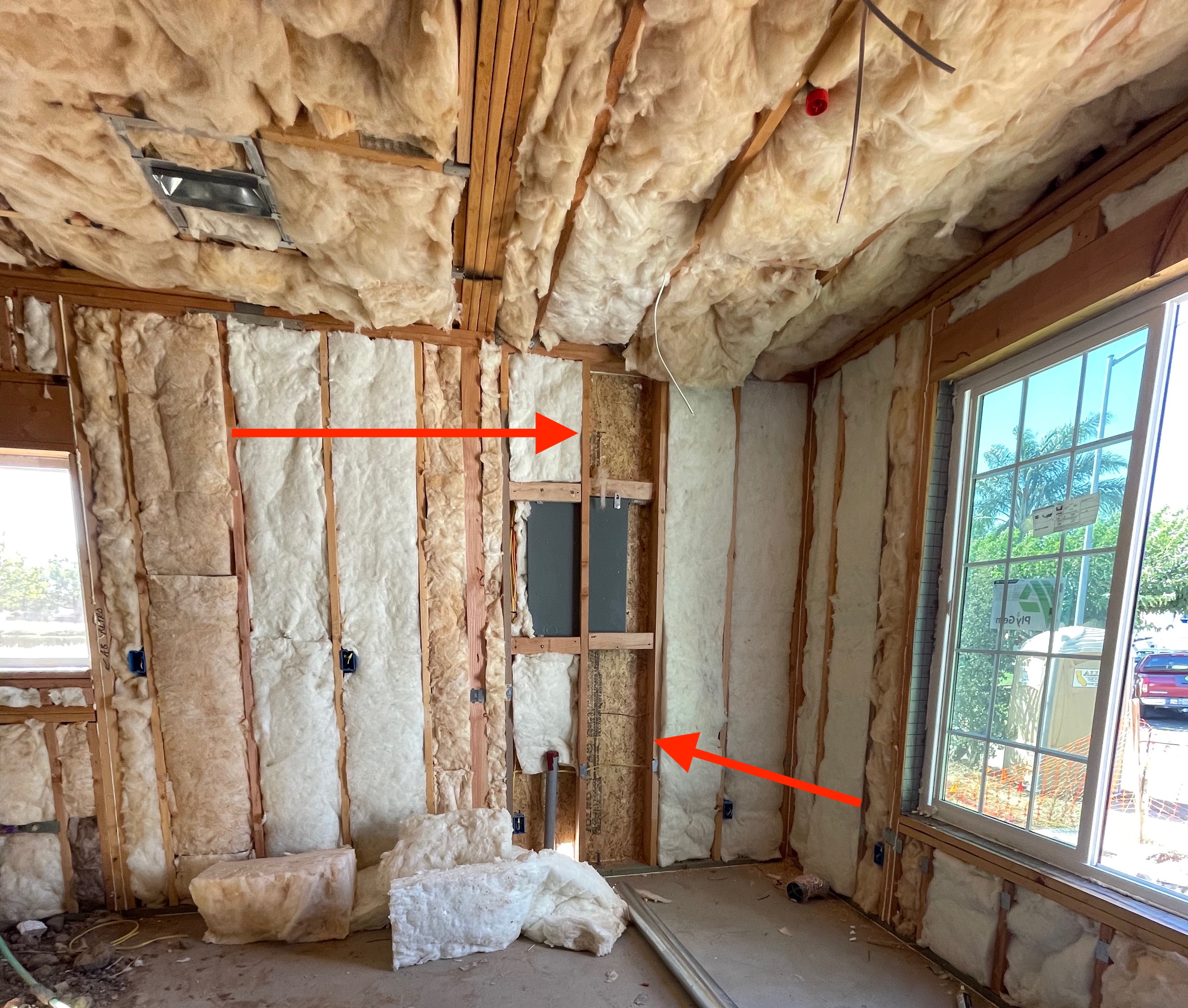
How to fix: Split the insulation so that half goes behind the wire and half in front, maintaining full thickness on both sides. The insulation should be cut — never compressed — around wiring.
3. Top Plate Missing Foam Strips for Air Leakage
Foam strips on the top plate are required to prevent air leakage between the wall cavity and the attic space. Missing foam strips are a frequent correction item. Without them, conditioned air escapes into the attic, significantly reducing energy efficiency.
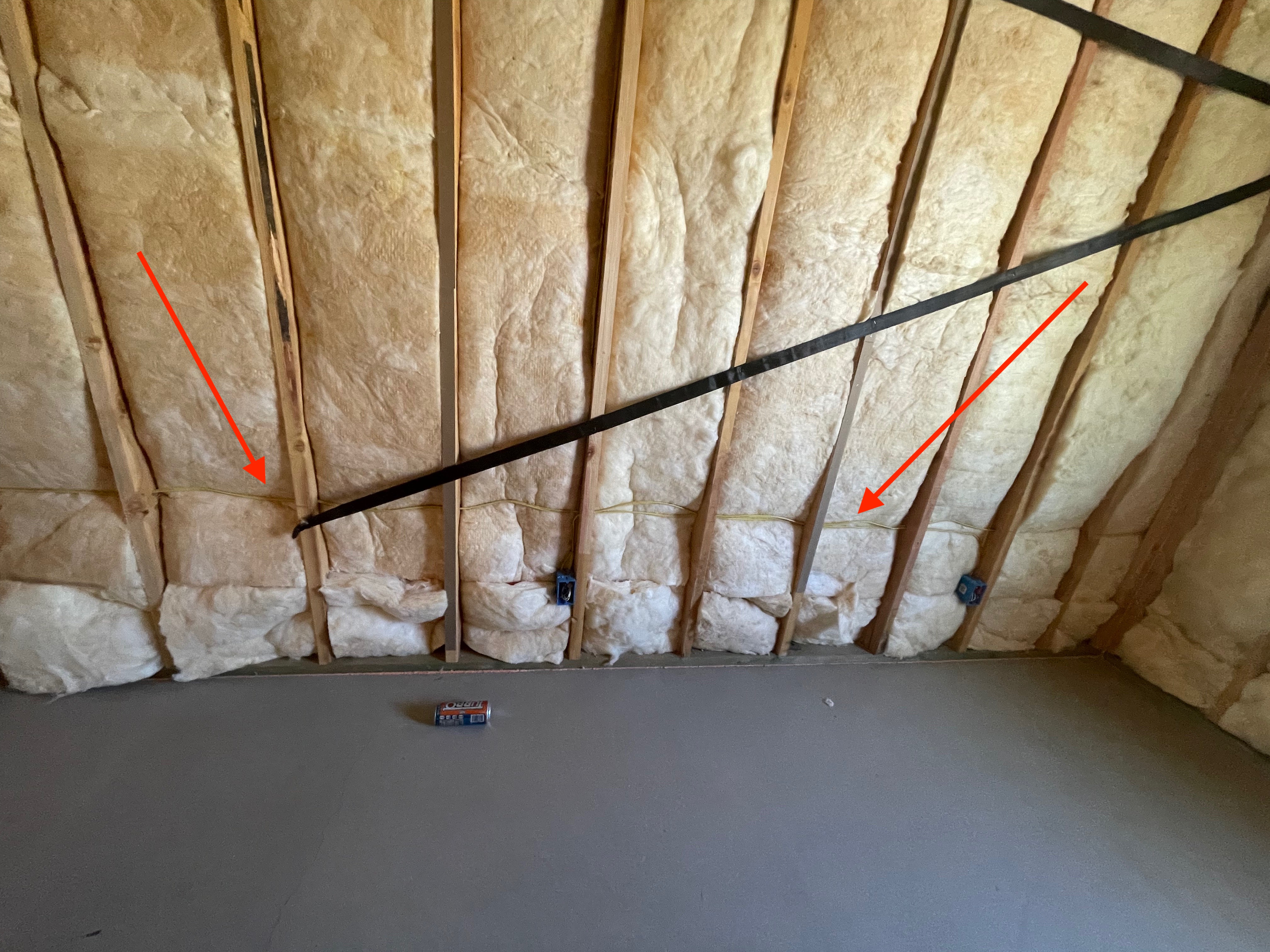
How to fix: Apply the appropriate foam gasket or sealant strips to the top plate before drywall installation. The seal must be continuous with no gaps.
4. Gaps and Voids in Wall Cavities
Any gap or void between the insulation and the framing members allows air to bypass the insulation, creating a thermal bridge. Even small gaps — as narrow as 1/4 inch — can reduce a wall's insulating effectiveness by up to 25%.
How to fix: Cut and fit insulation precisely to fill the entire cavity. Batt insulation should be cut to fit snugly against studs, headers, and sills without compression or gaps.
5. Improper Insulation Around Penetrations
Pipes, electrical boxes, and other penetrations through insulated walls require special attention. Insulation must be carefully cut and fitted around these obstructions — simply stuffing or compressing insulation around them is not acceptable.
How to fix: Cut the insulation to fit precisely around the penetration. For electrical boxes, cut a notch in the batt to fit around the box while maintaining full contact with the wall sheathing behind it.
6. Insulation Not Properly Aligned with Air Barrier
Insulation must be in continuous contact with the air barrier (typically the exterior sheathing) to be effective. When insulation pulls away from the air barrier or is installed with an air gap behind it, convective air currents can circulate within the wall cavity, drastically reducing thermal performance.
How to fix: Ensure the insulation is in full contact with the exterior sheathing with no air gaps. If using faced insulation, the facing should be stapled to the face of the studs (not inset) to maintain contact.
How to Resolve QII Corrections
If your project has received a correction notice, follow these steps to get back on track:
Step 1: Review the Correction Notice
Carefully read through each item on the correction notice. The HERS Rater will document the specific location and nature of each issue, often with photographs. Make sure you understand exactly what needs to be fixed and where.
Step 2: Address Each Issue
Work through each correction item systematically. Ensure the insulation crew understands the specific requirements — this isn't just about filling the space, it's about proper installation technique. Common fixes include:
- Replacing missing insulation with the correct R-value material
- Splitting batts around wiring instead of compressing
- Adding foam gaskets to top plates
- Re-cutting insulation to eliminate gaps and voids
- Repositioning insulation to contact the air barrier
Step 3: Schedule a Re-Inspection
Once all corrections are complete, contact us to schedule a follow-up QII inspection. The HERS Rater will return to verify that each correction item has been properly addressed.
Step 4: Verification and Documentation
During the re-inspection, the HERS Rater will photograph the corrected areas and verify compliance. Once all items pass, your QII inspection will be marked as complete, allowing your project to move forward.
Quick Reference: Common QII Corrections
| Correction Type | Typical Cause | Resolution |
|---|---|---|
| Missing insulation | Installer oversight or missed areas | Install correct R-value insulation in all uncovered areas |
| Compressed insulation | Wires, pipes, or boxes compressing batts | Split insulation around obstructions; never compress |
| Missing foam strips | Top plate not sealed before inspection | Apply continuous foam gasket to top plate |
| Gaps and voids | Poor cutting or fitting of batts | Re-cut insulation to fit snugly in full cavity |
| Wrong R-value | Incorrect material installed | Replace with material matching Title 24 specifications |
| Air barrier misalignment | Insulation not contacting sheathing | Reposition to maintain full contact with air barrier |
| Moisture damage | Water intrusion or high humidity during install | Replace damaged insulation; address moisture source |
Tips to Avoid QII Correction Notices
The best correction is the one you never receive. Here are best practices for builders and insulation contractors to pass QII on the first try:
Before Installation
- Review the Title 24 report — Know exactly what R-values and insulation types are required for each section of the building
- Inspect the framing — Ensure framing is complete and ready for insulation with no missing blocking or fire stops
- Check for moisture — Make sure the building is dry before installing insulation
During Installation
- Cut, don't compress — Always cut insulation to fit around wires, pipes, and boxes rather than compressing it
- Fill cavities completely — No gaps, voids, or spaces between insulation and framing members
- Install foam strips — Apply foam gaskets to all top plates before the insulation crew leaves
- Maintain air barrier contact — Insulation should be flush against the exterior sheathing with no air gaps
- Use the right material — Verify the R-value of the insulation matches the Title 24 report for each specific area
Before the Inspection
- Self-inspect — Walk through the building and check every wall cavity, ceiling section, and floor area
- Document your work — Take photos of installed insulation for your own records
- Communicate with the HERS Rater — If you have questions about specific details, call us before the inspection day
Frequently Asked Questions
Can corrections be fixed while the HERS Rater is on site?
Yes! Many correction items — such as small gaps, missing insulation in accessible areas, or loose batts — can be corrected during the inspection visit. If the insulation crew is on site or nearby, corrections can often be made and verified the same day. This saves time and avoids the need for a separate re-inspection visit.
How long do I have to fix QII corrections?
There is no strict deadline for corrections, but they must be resolved before your project can receive its Certificate of Installation and move forward with drywall and subsequent construction phases. We recommend addressing corrections as quickly as possible to avoid project delays.
What if corrections aren't resolved?
If correction items are not addressed, the QII inspection cannot be marked as passing. This means the project will not receive the required HERS certification for insulation, which can hold up building permits, final inspections, and certificate of occupancy. It's in everyone's interest to resolve corrections promptly.
Does a correction notice mean we failed the inspection?
Not exactly. A correction notice means specific items need to be addressed before the inspection can pass. It's a standard part of the quality assurance process. The vast majority of correction items are straightforward to fix, and most projects pass after corrections are made. Think of it as a quality checkpoint, not a failure.
How much does a re-inspection cost?
Re-inspection policies and fees vary. Contact our office to discuss the specifics for your project. In many cases, if corrections can be made while the HERS Rater is still on site, no additional visit charge applies.
QII Corrections for ADUs and Additions
With the surge in Accessory Dwelling Unit (ADU) construction across Sacramento, Roseville, Folsom, and surrounding communities, QII correction notices on ADU and addition projects have become increasingly common. ADUs and home additions present unique insulation challenges that differ from standard new construction:
- Tying into existing structures — Where the new addition connects to the original building, insulation must be continuous with no gaps at the transition. Misaligned framing depths between old and new construction often create voids that are flagged during QII.
- Smaller, more complex framing — ADUs tend to have tighter spaces, more irregular framing layouts, and a higher density of penetrations (electrical, plumbing, HVAC) per square foot. This means more opportunities for compressed or improperly fitted insulation.
- Attic and crawlspace transitions — When an ADU shares or connects to an existing attic or crawlspace, the insulation boundary must be clearly defined and continuous. Missing insulation at the boundary between conditioned and unconditioned space is a frequent correction item.
- Different R-value requirements — ADUs may have different Title 24 requirements than the main residence, especially if they have a different climate zone designation or different window-to-wall ratios. Always verify the Title 24 report specific to the ADU — don't assume it matches the main house.
- Garage conversions — Converting an existing garage to an ADU requires insulating walls and ceilings that were previously unconditioned. The garage door wall, in particular, often requires careful attention to ensure full insulation coverage and air sealing after the new wall is framed.
Tips for ADU QII Success
- Request the Title 24 report for the ADU as a separate document if it's not included with the main project
- Pay special attention to the connection points between the ADU and the existing structure
- Ensure the insulation contractor understands the specific R-value requirements for each wall, ceiling, and floor section of the ADU
- Schedule a pre-inspection walkthrough with your HERS Rater if you're unsure about any transition details
For ADU and addition projects in the Sacramento Valley, contact Poppy Energy to schedule your QII or to discuss any questions about insulation requirements before your inspection.
Need Help with QII Corrections?
If you have received a correction notice or want to ensure your insulation installation meets standards before the inspection, contact us for assistance. Our experienced HERS Raters can guide you through the correction process and help you pass your QII inspection.
For more information about the Quality Insulation Inspection process, visit our QII service page.
Highest Quality Brands & Products





Need Help with QII Corrections?
Whether you've received a correction notice or want to ensure your insulation installation passes the first time, our experienced HERS Raters are here to help. Contact us today for a free estimate!